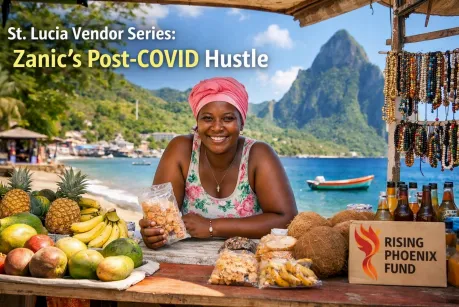
St. Lucia Vendor Series: Zanic’s Post-COVID Hustle
St. Lucia Vendor Series: Zanic’s Post-COVID Hustle
Welcome back to our series on the incredible women of the St. Lucia market. If you’ve been following along, you’ve already met Shamane and Marilyn: two women who have spent decades building legacies and putting their children through school. Their stories are about endurance.
But today, we’re talking about something a little different. We’re talking about Zanic.
Zanic represents the "new guard" of the Castries market. While others were leaning on years of established reputation when the pandemic hit, Zanic was doing something most people thought was crazy: she was just getting started.
Starting at the "Wrong" Time
We all remember 2020 and 2021. For most of the world, it was a time to pause, hunker down, and wait for the storm to pass. In St. Lucia, the "storm" wasn't just a virus; it was the total disappearance of the island’s economic heartbeat: tourism.
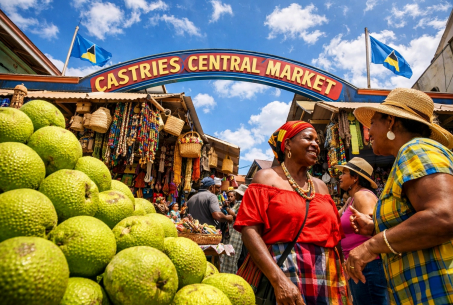
The cruise ships stopped coming. The planes stayed on the ground. The bustling streets of Castries, usually filled with visitors looking for spices, handmade crafts, and a taste of the island, went quiet
This is exactly when Zanic decided to launch her business.
Most vendors in the market have a "safety net" of sorts: not a financial one, but a situational one. They know that when the high season hits and the ships dock, the money will flow. They’ve seen the cycle for thirty years. They know how to weather the lean months because they’ve banked the good ones.
Zanic didn't have that. She started at zero, in a world that had effectively moved to zero.
The Ghost Town Hustle
Imagine setting up a stall when there are no customers. Imagine investing your last bit of savings into inventory when the ports are closed. That was Zanic’s reality.
For the established vendors, the COVID-19 pandemic was about survival and waiting. For Zanic, it was about pure, high-octane grit. She couldn't rely on the "easy" tourism money because there wasn't any. She had to learn how to sell to locals, how to diversify what she offered, and how to make every single cent count.
She didn't have the luxury of cruise ship crowds to mask any mistakes. She had to be perfect from day one. She had to be more creative, more aggressive, and more resilient than anyone else just to break even.
Why the Post-COVID Hustle is Different
There’s a specific kind of pressure that comes with being a "pandemic entrepreneur."
When you start a business during a global crisis, you don't develop bad habits. You don't get used to "easy" money. You learn how to operate lean. You learn that your business is a bridge: not just a way to pay today’s bills, but a structure you’re building to carry your family into a more stable future.
Zanic’s goal isn’t just to "get by." She wants to scale. She’s looking at her stall not as a hobby or a side gig, but as the foundation of an empire. She talks about growth with a level of intensity that is truly inspiring. For her, entrepreneurship is the only way to build a future that isn't dependent on someone else’s paycheck.

The Family Bridge
Like many of the women we support at Rising Phoenix Fund, Zanic’s "why" is her family
But whereas some of the older vendors are focused on maintaining a legacy, Zanic is focused on creating one from scratch. She’s building a bridge. On one side of the bridge is the uncertainty and financial struggle she grew up with. On the other side is the future she wants for her children: a future defined by choice, education, and opportunity.
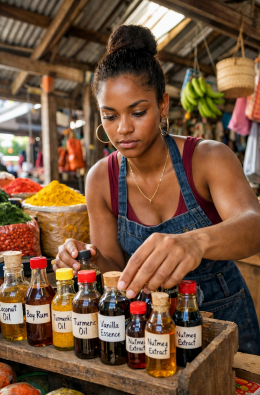
Every bottle of spice she sells, every handmade item she carefully displays, is a brick in that bridge.
The challenge is that building a bridge while the world is still economically "recovering" is incredibly hard. Inflation has driven up the cost of goods. Local competition is fierce. And while the cruise ships are finally back, the market has changed. Tourists are more cautious, and the competition for their attention is higher than ever.
The Role of Micro-Impact
This is where the Rising Phoenix Fund comes in, and where you come in.
Women like Zanic don't need a million-dollar investment. They aren't looking for a corporate bailout. They need what we call "catalytic capital."
A small grant or a micro-donation of $500 or $1,000 can change everything for a vendor like Zanic. It can mean:
• Buying inventory in bulk to lower her costs and increase her margins.
• Improving her stall display to attract more of those returning cruise ship passengers.
• Investing in better packaging so her products can be exported or sold in higher-end boutiques.
When you support a woman entrepreneur in a marginalized community, you aren't just giving a gift. You are fueling an engine. Zanic already has the grit. She already has the work ethic. She just needs the fuel to make that engine go faster.
Why These Entrepreneurs Matter
It’s easy to look at a global economy and think that small market vendors don't move the needle. But that’s wrong.
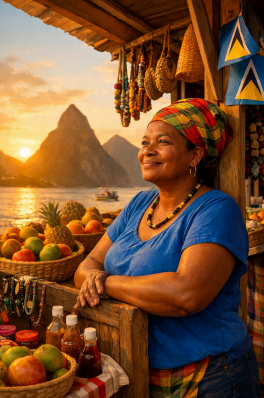
In St. Lucia, and in many developing nations, the informal economy: the street vendors, the market ladies, the small-scale producers: is the backbone of the community. These women spend their money locally. They pay for school fees, they support local farmers, and they help their neighbors.
When Zanic succeeds, her entire neighborhood feels it. Her children see a mother who didn't give up when the world shut down. They see that entrepreneurship is a path to freedom.
Supporting women-led businesses is the most direct way to create social impact. There’s no "trickledown" effect here; it’s a "ground-up" effect. The money goes straight to the source and stays in the community
How You Can Help Zanic (and others like her)
We believe in the power of the "micro." You don't have to be a billionaire to change a life. In fact, most of the impact we have at Rising Phoenix Fund comes from regular people who decide that $25, $50, or $100 is better spent on a woman’s future than on a couple of fancy coffees.
If Zanic’s story of post-COVID grit resonates with you, here is how you can take action:
1. Donate: Even small amounts make a massive difference in the context of a local St. Lucian market. Your donation goes directly toward funding grants for women who are scaling their businesses.
2. Share the Story: Most people don't realize how much these vendors lost during the pandemic. By sharing Zanic's story, you help build awareness for the "invisible" entrepreneurs who are still fighting to recover.
3. Think Local: Next time you travel, skip the big souvenir shops. Go to the local market. Find the "Zanics" of the world and buy from them directly
Zanic started her business when the world was at its lowest point. That takes a level of courage that most of us can only imagine. Now that the world is opening back up, let’s make sure she has the support she needs to turn that "hustle" into a lasting success.
Ready to make an impact?
Donate to the Rising Phoenix Fund now Every dollar helps us provide the tools, training, and capital that women like Zanic need to build their bridges. Let’s help her finish what she started in the middle of the storm.
We have one more story to share from our St. Lucia trip. Next time, we’ll meet Matilda, a woman who has spent 52 years in the market. Her perspective on how the island has changed: and her dedication to her grandson: is something you won't want to miss.
Thanks for being part of this journey with us. Your support means the world to these women, and it means the world to us
Stay tuned for more updates from the ground! ( The Rising Phoenix Fund Team)

