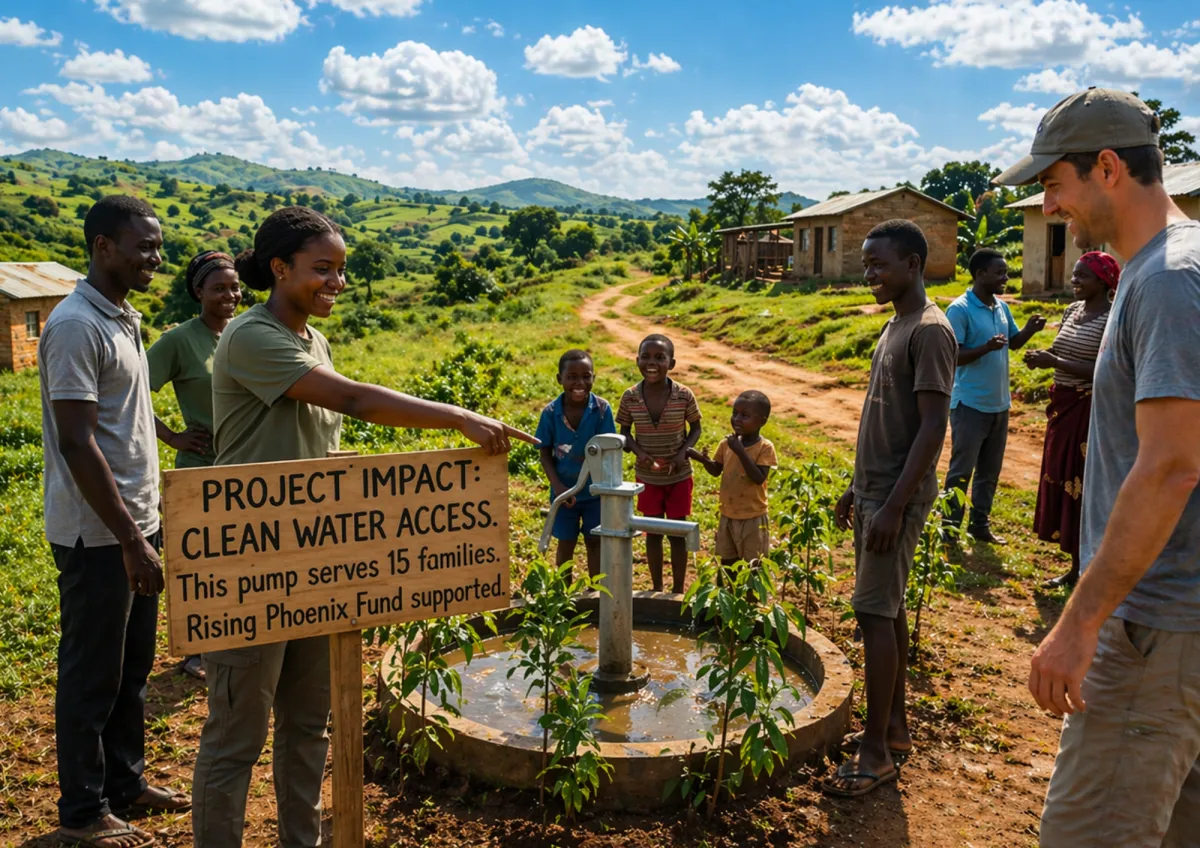
5 Steps: How to Track Your Impact and See Exactly Where Your Money Goes (Easy Guide for Donors)
5 Steps: How to Track Your Impact and See Exactly Where Your Money Goes (Easy Guide for Donors)
Let’s be honest: giving money to charity can sometimes feel like throwing a coin into a very deep, very dark well. You hear the splash, but you never actually see where the water goes. You want to help, but there’s always that nagging question in the back of your mind: Is my $50 actually making a difference, or is it just paying for a fancy office chair in a skyscraper somewhere? At Rising Phoenix Fund Inc., we believe you shouldn’t have to wonder. Transparency isn't just a buzzword for us; it’s the foundation of how we work. When you support international women business owners: like the resilient street vendors in St. Lucia: you deserve to see the direct line between your gift and their growth. If you’re ready to move from "blind giving" to "impact investing," this guide is for you. Here are five simple steps to track your impact and see exactly how your money is changing lives.
1. Look for Specific, Tangible Goals (The "What")
The first step in tracking your impact starts before you even hit the "donate" button. When you’re looking at a cause, skip the vague mission statements like "ending world hunger" or "empowering women." While those are noble goals, they are impossible to track on a personal level.
Instead, look for specific, monetary targets and outcome-based goals. For example, a clear goal looks like this: "We are raising $5,000 to provide 10 micro-grants to market vendors in Castries, St. Lucia, to help them restock inventory after the cruise ship season." When the goal is specific, the tracking is easy. You can look at the progress bar and know exactly what your portion is funding. At Rising Phoenix Fund, we focus on micro-donations: often under $1,000: because we know that in the world of a local street vendor, a few hundred dollars isn't just "change"; it’s a life-altering investment.

2. Understand the "Revolving Fund" Model
This is where things get really exciting. Most people think of a donation as a one-time event: you give $100, the organization spends $100, and it’s gone. But at Rising Phoenix Fund, we use a Revolving Fund model. Think of it as the gift that keeps on giving. When you donate to help a woman business owner, that money helps her buy inventory or repair her stall. As her business stabilizes and she thrives, those funds (or the impact of them) are designed to "revolve" to help the next woman in line.
How to track this
: Ask the organization how they handle recycled funds. A transparent non-profit will be able to show you how a single $500 donation from three years ago has actually helped three or four different women over time. By supporting a revolving fund, your initial impact grows exponentially. You aren’t just buying a woman a fish; you’re funding a boat that helps the whole village learn to fish, one person at a time.
3. Follow the "Who": Focus on the Beneficiaries
Impact isn't found in spreadsheets; it’s found in stories. To see where your money goes, you need to know who is receiving it. In our current St. Lucia Vendor Series, we focus on the incredible women who run the local markets. These women are the backbone of their families. When you track your impact, you should be looking for profiles of the actual entrepreneurs. During the height of the COVID-19 pandemic, tourism in St. Lucia completely vanished. For vendors who depend almost entirely on cruise ship passengers, this was devastating. They didn't just lose "extra" income; they lost the ability to pay for their children’s school uniforms and keep food on the table. When you track your donation, look for updates on these specific challenges. Did the vendor manage to reopen her stall? Is she able to support her family again? Seeing the "Who" makes the "How much" much more meaningful.

4. Calculate the "Cost Per Outcome"
If you want to be a savvy donor, you have to look at the math: but keep it simple. The "Cost Per Outcome" is a fancy way of asking: How much does it cost to actually change one person's life?
For many of the marginalized women business owners we work with, the barrier to success is surprisingly small. A street vendor might only need $300 to buy a new refrigerator for her juice stand or $150 to buy a bulk shipment of handmade crafts to sell to tourists.
Try this simple calculation: Take the total amount raised for a project and divide it by the number of women helped. If an organization raised $3,000 and helped 10 vendors, your cost per outcome is $300. Knowing this number allows you to see exactly what your donation "buys." If you give $30, you know you’ve funded 10% of a woman’s total business transformation. That is real, trackable impact that you can see and feel.
5. Demand Quality Evidence and Testimonials
The final step in tracking your money is looking for proof. A transparent organization will provide "Quality of Impact Evidence." This includes:
• Financial Reports: Where did the cents go? (Hint: Most donors prefer to see a low "cost per dollar raised," meaning more money goes to the vendors and less to administrative overhead).
• Photos and Videos: Visual proof of the stall being repaired or the inventory being stocked.
• Direct Testimonials: Hearing from the women themselves about how the funding helped them overcome the loss of tourism during COVID-19 and how they are building back better for their families. At Rising Phoenix Fund, we make it a priority to share these stories. We want you to see the smile on a vendor's face in St. Lucia when she realizes she doesn't have to close her business because of a temporary setback.

Why Micro-Donations are the Secret to Impact
You might think, "I only have $25 to give. That won't do anything." In the world of international social impact, that couldn't be further from the truth. For a local market vendor in a marginalized community, $25 can cover the cost of her permits for a month. It can buy the supplies she needs to create her next batch of products. When hundreds of people give small amounts, it creates a massive wave of support. And because our fund is a revolving fund, that $25 doesn't just get used once. it becomes part of a permanent resource for women business owners in that community.
Supporting the Women of St. Lucia
Our focus right now is on the women of St. Lucia. They have faced incredible hurdles: from the total shutdown of the cruise industry to the rising costs of goods. These women aren't looking for a handout; they are looking for a hand up. They are entrepreneurs, mothers, and community leaders who just need a little bit of capital to get their dreams back on track.
When you give to the Rising Phoenix Fund, you aren't just donating; you are investing in a family’s future. You are making sure a child stays in school and a local economy stays vibrant.
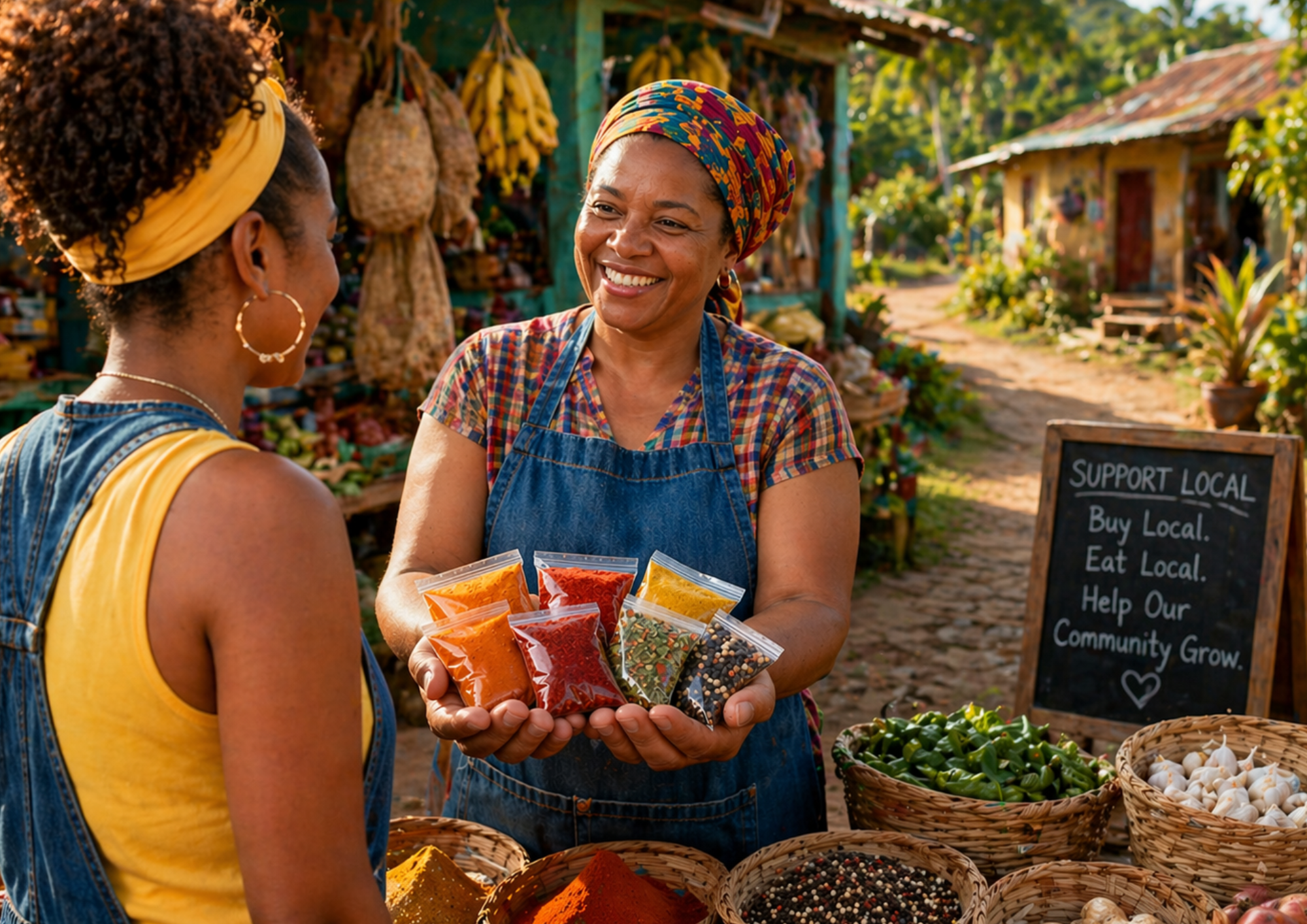
Ready to See Your Impact?
Tracking your impact shouldn't be a chore. It should be the most rewarding part of giving! By following these five steps: focusing on goals, understanding the revolving fund, following the stories, calculating outcomes, and looking for proof: you can be 100% confident in where your money goes.
Will you join us in supporting a woman business owner today?
Your micro-donation can be the spark that helps a St. Lucian vendor rise from the ashes of the past few years and build a thriving business once again. Donate Now to Rising Phoenix Fund Inc. Let’s build something that lasts, together. Over time, you’ll see exactly how your contribution moves through the community, helping one woman, then another, and another. That’s the power of transparency. That’s the power of the Rising Phoenix.
Donate Now to Rising Phoenix Fund Inc.
Let’s build something that lasts, together. Over time, you’ll see exactly how your contribution moves through the community, helping one woman, then another, and another. That’s the power of transparency. That’s the power of the Rising Phoenix.

